PROtrough vs traditional concrete trough
10 real-world examples from the UK and Europe


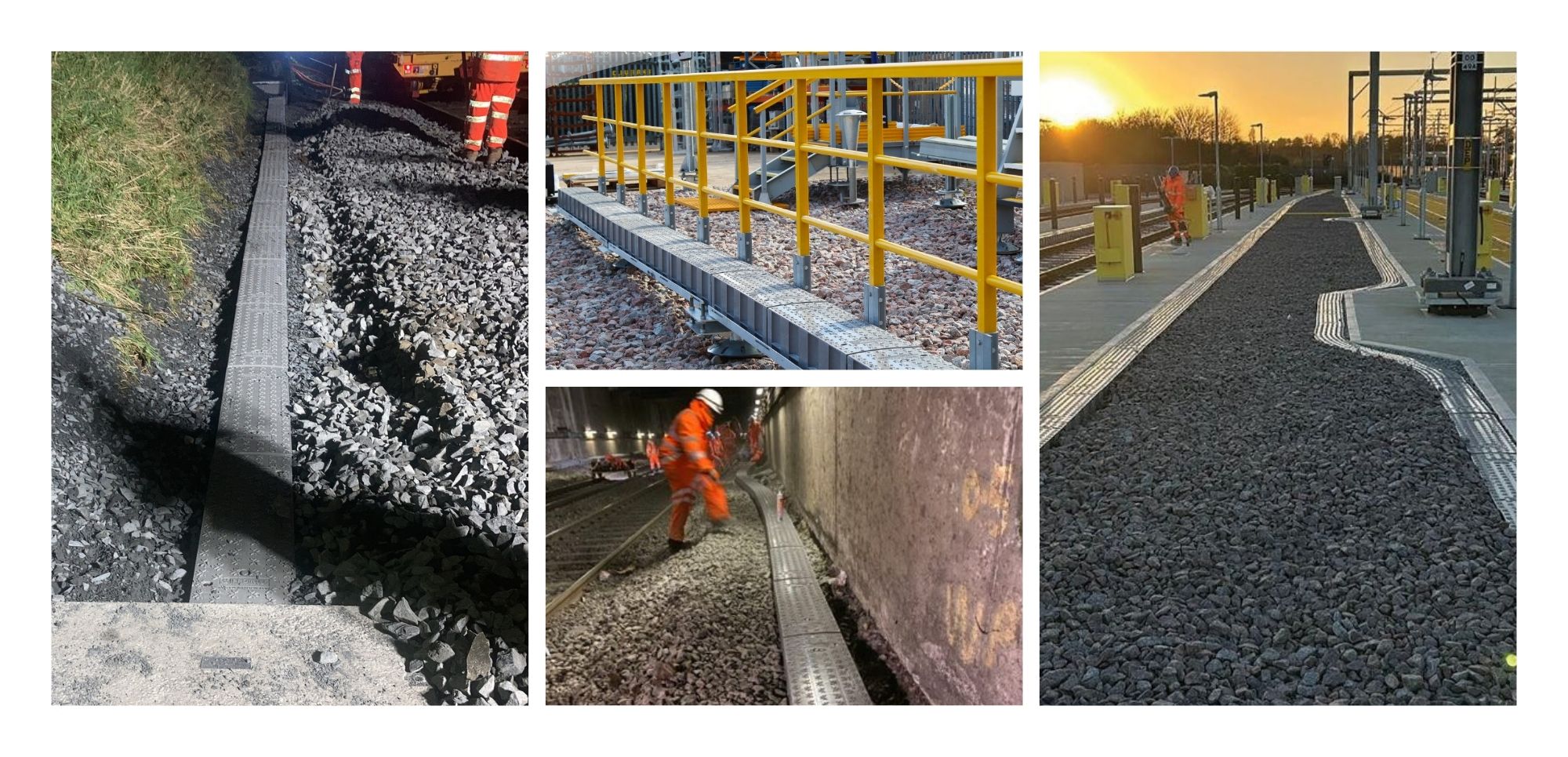
Traditional concrete trough is strong, familiar, and it meets rail fire expectations. However, it comes with multiple trade-offs. That includes handling and installation time, sustainability credentials, adaptability, and a host of other practical inconveniences that contractors will know all too well.
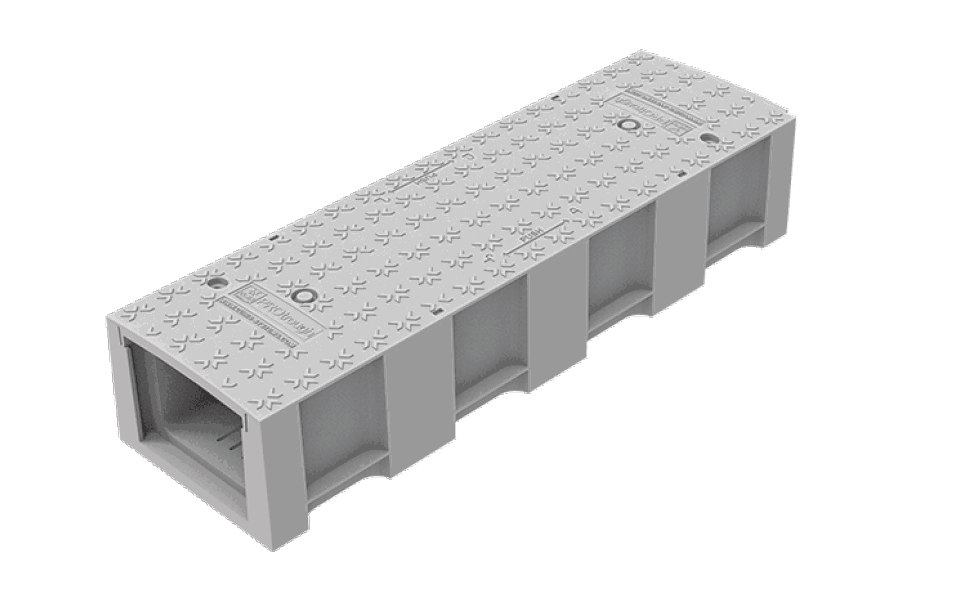
PROtrough is a proven cable trough alternative made from lightweight composites. It's 5 times lighter than concrete, without compromising on strength. It's also designed to comply with European fire retardancy specifications, including those for tunnels and stations. The larger PROtrough 350 adds capacity for bigger routes.
We've pulled up 10 real-world PROtrough projects to compare our modern GRP solution to traditional concrete trough. Here are 10 sites where PROtrough went in, from night possessions to a tunnel, and how it compared with concrete on each.
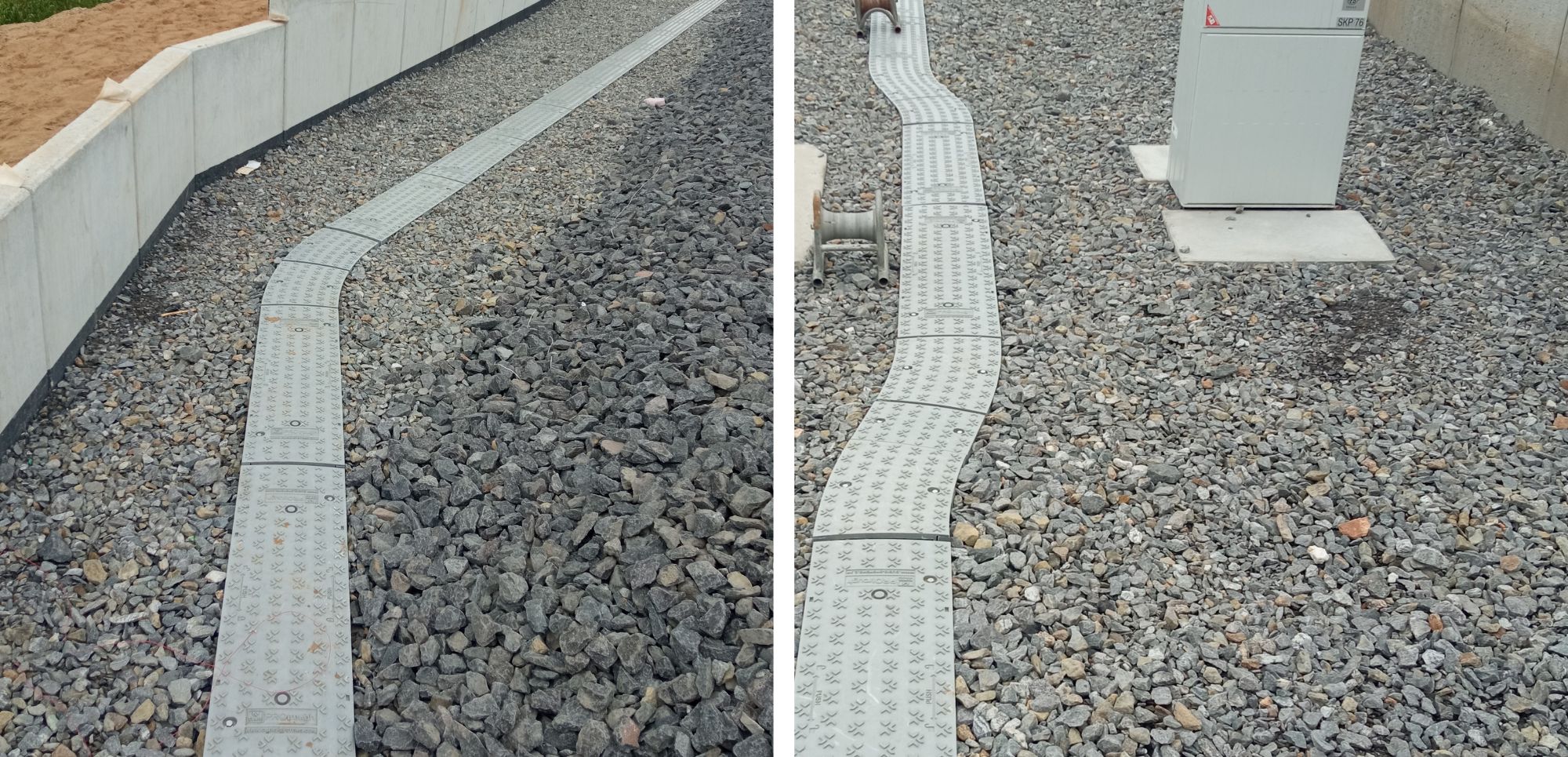
1. Cable trough at the foot of a new retaining wall in Poland
📍 Location: Glincz – Kartuzy, Railway Line No. 229, Poland
🪛 Solutions pictured: PROtrough & wedge unit
📌 Highlight: A continuous run of PROtrough laid along the foot of a precast retaining wall, with the trough following the natural curve of the route.
⚖️ Versus concrete trough: On a line being built out in open country, getting material to where it's needed is a job in itself. Concrete trough is heavy to haul and handle at every stage, whereas PROtrough's modular GRP sections make transport and logistics simpler. In fact, a recent study shows that it reduces truck requirements by 80% compared to concrete.
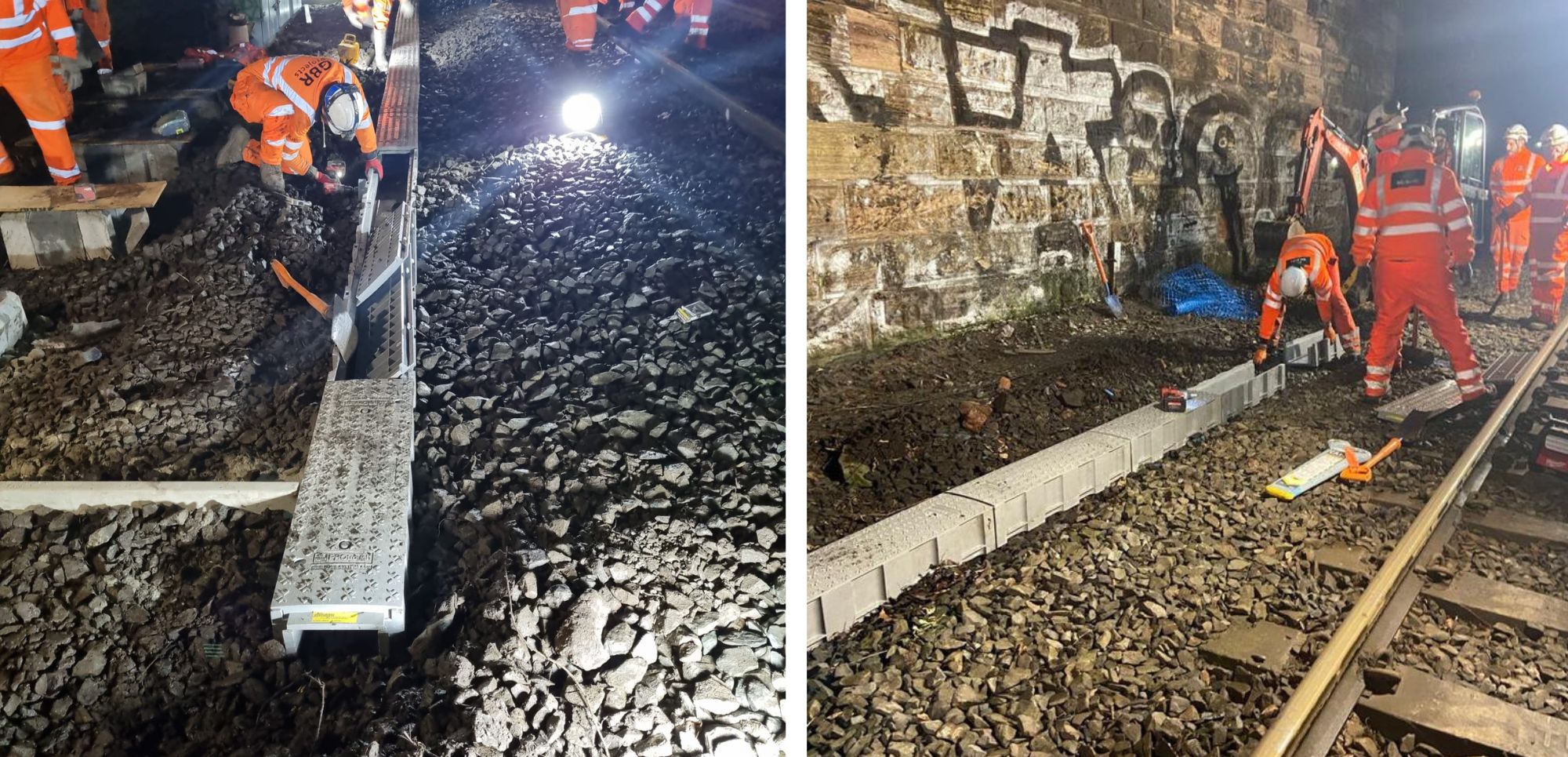
2. Getting trough in during a night possession at Weavers Cross, Belfast
📍 Location: Weavers Cross, Belfast, Northern Ireland
🪛 Solution pictured: PROtrough
📌 Highlight: Fast, straightforward installation in a tight night possession window, with units that slide and drop together, a cover that clicks into place and no heavy plant needed to lift them.
⚖️ Versus concrete trough: Concrete trough is heavy, labour-intensive, and often needs mechanical lifting equipment. PROtrough offers simple 'slide and drop' male to female connectivity, with a unique one click interlocking cover and sliding mechanism. This makes for easy, quick installations - which matters when the site is only available for a few hours overnight.
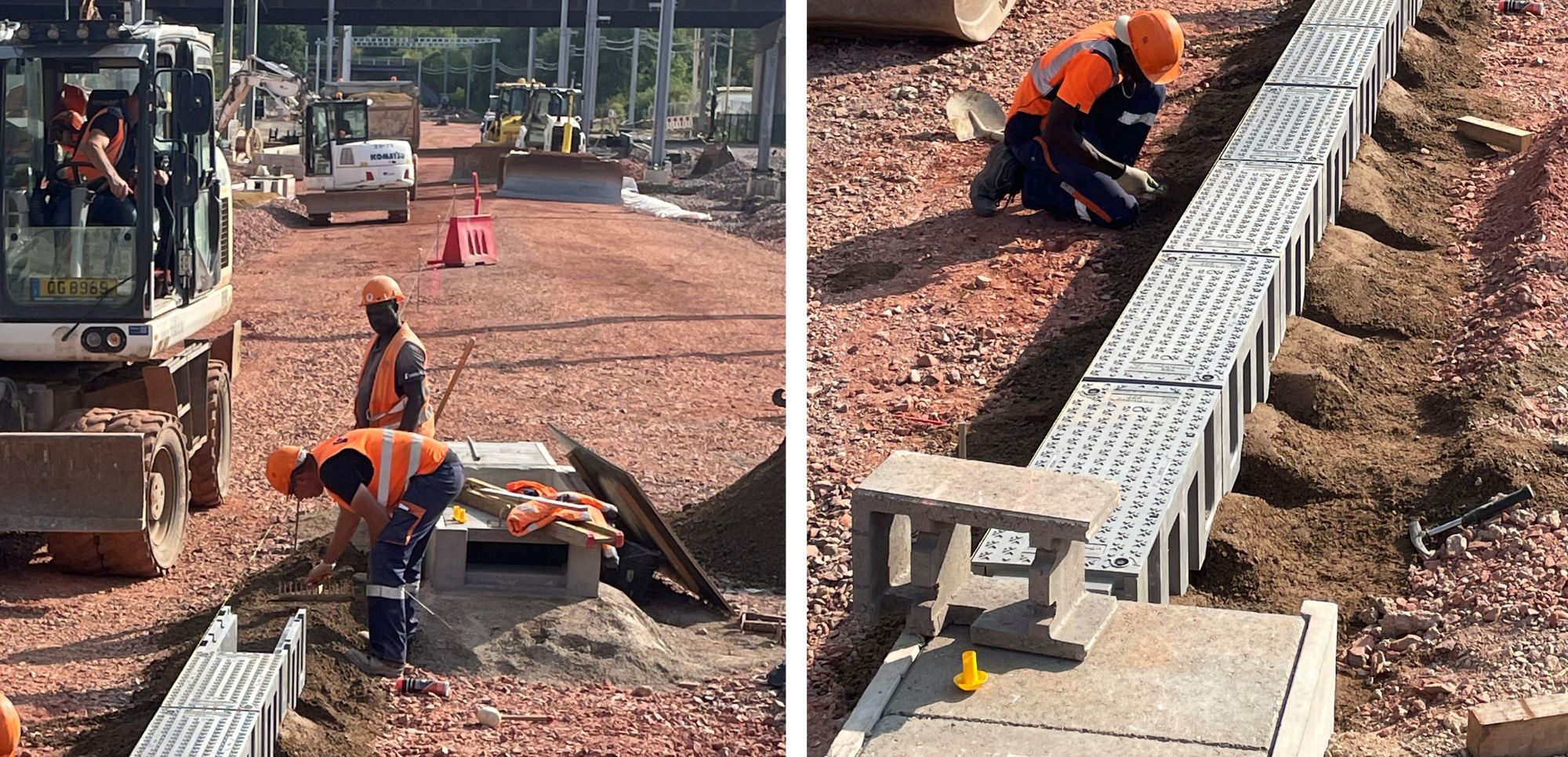
3. More capacity in a single run in Luxembourg
📍 Location: Luxembourg
🪛 Solution pictured: PROtrough 350
📌 Highlight: The largest unit in the PROtrough range, giving a single trough run room for more cables, with the same slide and drop connection as the rest of the range.
⚖️ Versus concrete trough: Concrete trough units can weigh over 90kg. At 23.35kg, the PROtrough 350 is a fraction of that, so even the extra capacity version doesn't mean extra lifting. The 350 model has the extra benefit of allowing for a dual-purpose walkway complete with a distinctive, anti-slip tread pattern.
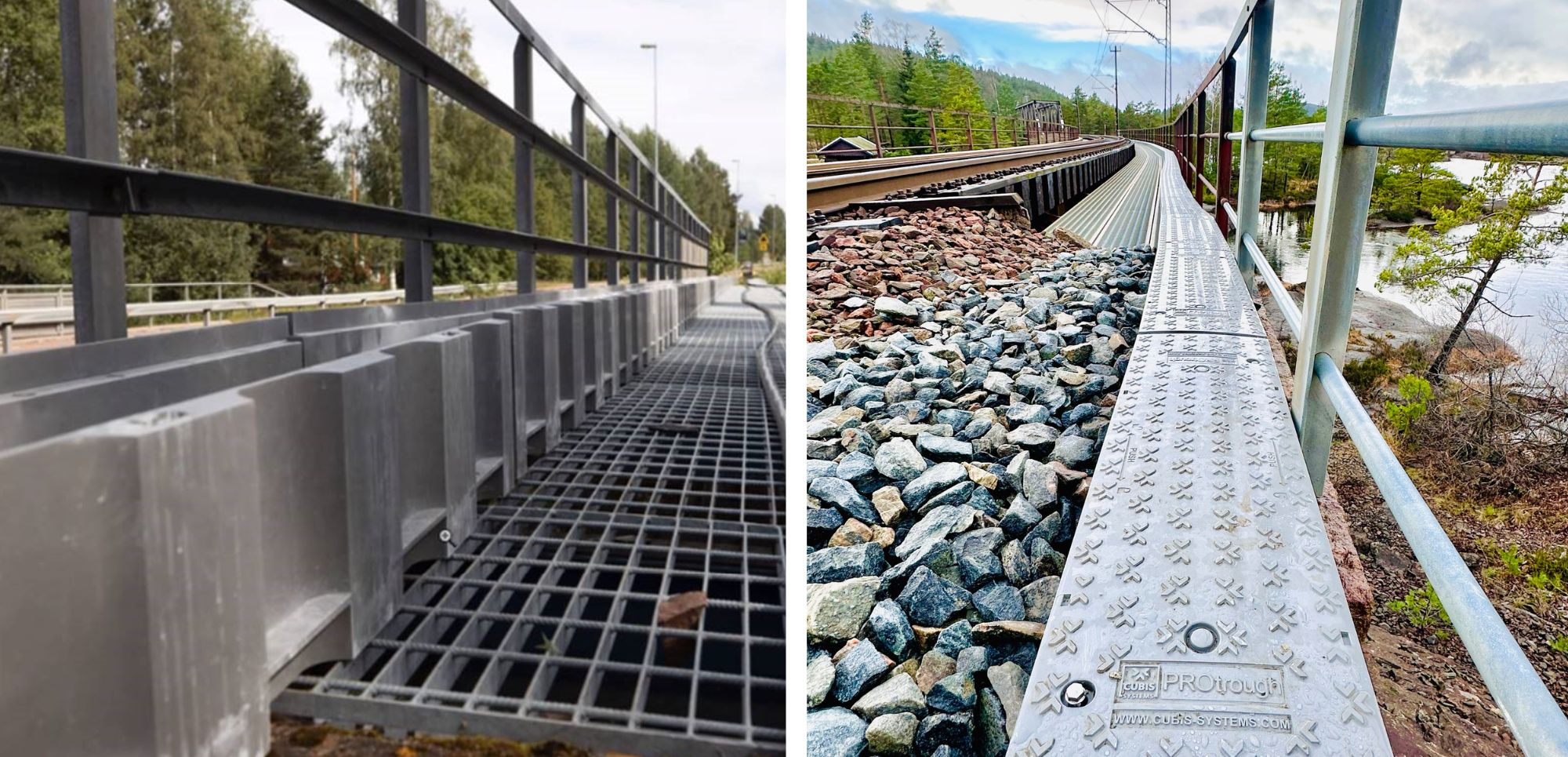
4. Cable trough fitted inside a Swedish rail bridge
📍 Location: Mora, Sweden
🪛 Solution pictured: PROtrough
📌 Highlight: Lightweight 1m GRP sections, assembled by hand and fitted inside the bridge, as part of a railway upgrade that lets traffic through Mora be controlled remotely.
⚖️ Versus concrete trough: Traditional trough is usually installed on the outside of a bridge. The ability to fit PROtrough on the inside reduced the need for work platforms, made the job more time-effective, and added the future benefit of leaving the trough easier to open for ongoing maintenance.
“By using a cable trough that can be laid on the inside of the bridge, we minimised the need for work platforms, and everything became more time effective. This also made our work easier for future projects because the cable trough is much easier to open when it is placed on the inside." Tobias Göransson, Project Manager (Swedish Bridge)
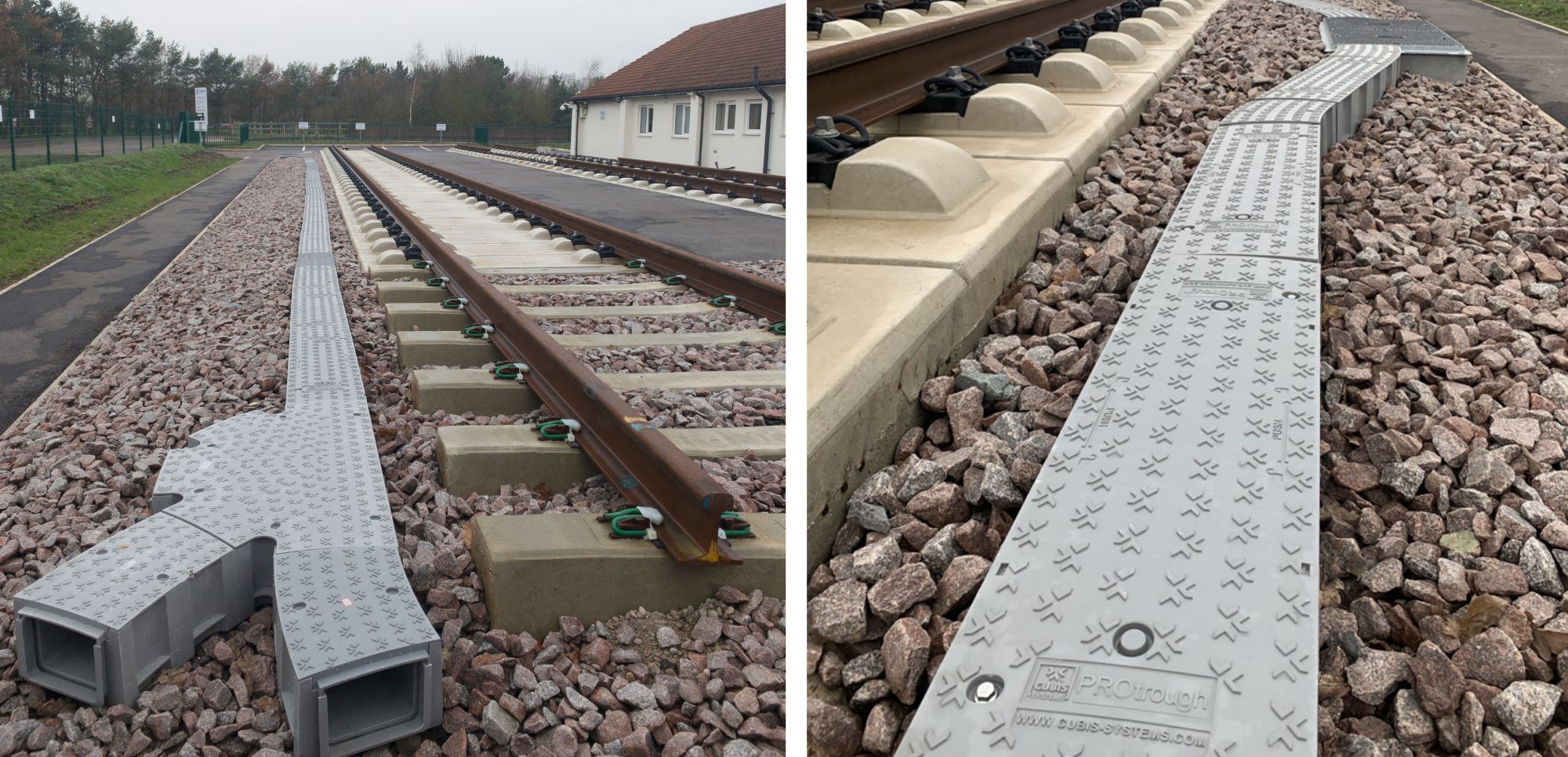
5. A full PROtrough route on a UK rail training track
📍 Location: Rail training centre, Burton upon Trent, England
🪛 Solution pictured: PROtrough, 5-way junction box, STAKKAbox™ ULTIMA access chamber and composite cover
📌 Highlight: A full PROtrough route laid out for trainees, from straight runs to a 5-way junction box, so the next generation of rail workers learn on modern methods of cable protection.
⚖️ Versus concrete trough: A junction is where a cable route stops being simple. The 5-way junction box, a first in the troughing market, gives you five adjustable inlets and outlets in one unit. And because PROtrough is quicker to install and adapt than concrete, changing the route on site is far less of a problem. A showcase example for learners on how modern installation keeps getting easier and smarter.
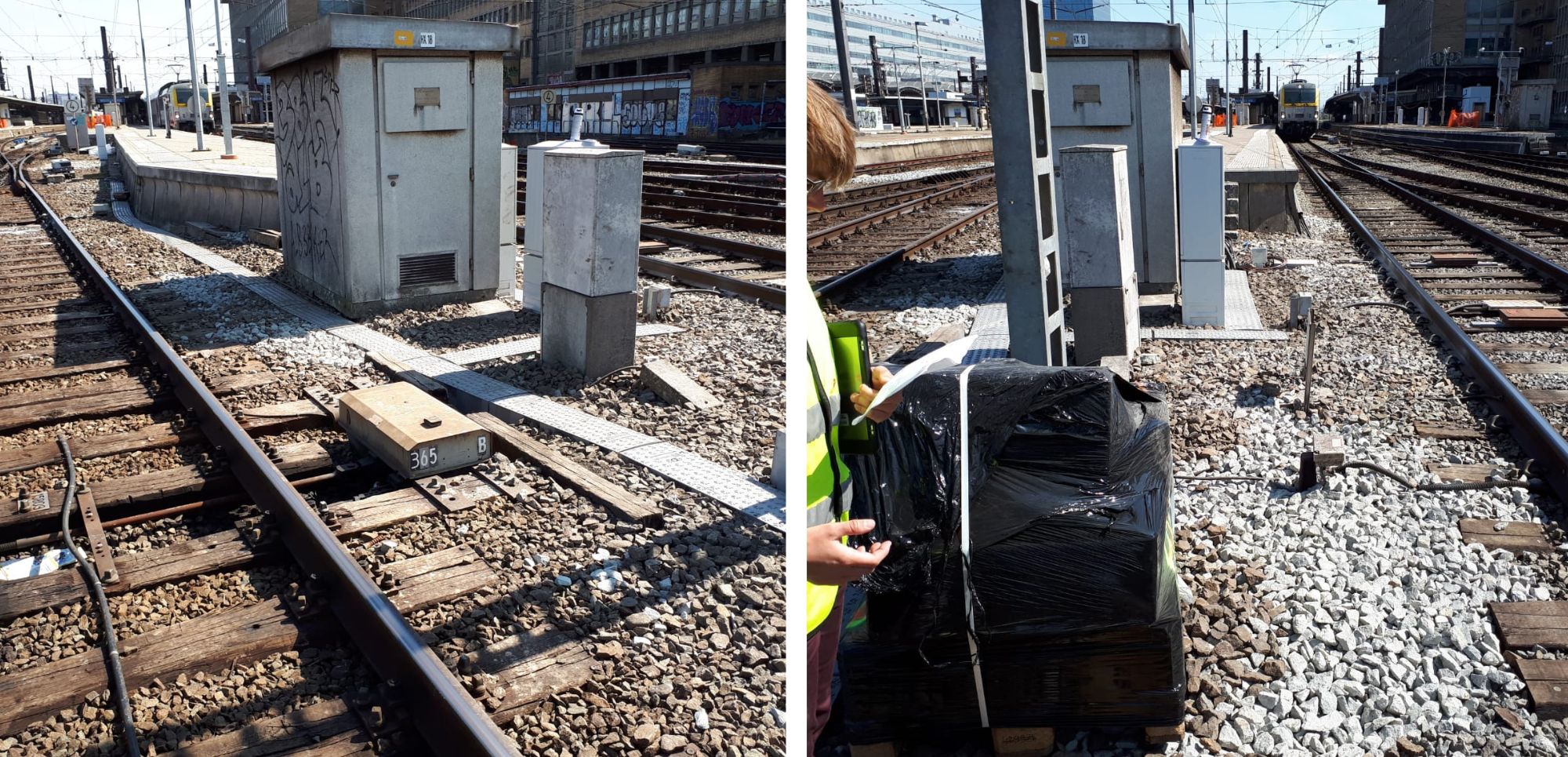
6. Meeting station fire requirements at Brussels-Midi
📍 Location: Brussels-Midi/Zuid, Belgium
🪛 Solutions pictured: PROtrough
📌 Highlight: A lightweight GRP trough linking lineside cabinets in a busy station throat, where cable protection has to meet rail fire retardancy requirements for stations.
⚖️ Versus concrete trough: Stations are one of the places where flame retardance matters most. While concrete meets those expectations, it's hard to handle between live tracks. PROtrough complies with European fire retardancy specifications for stations and tunnels, within a significantly more practical and overall more resilient solution.
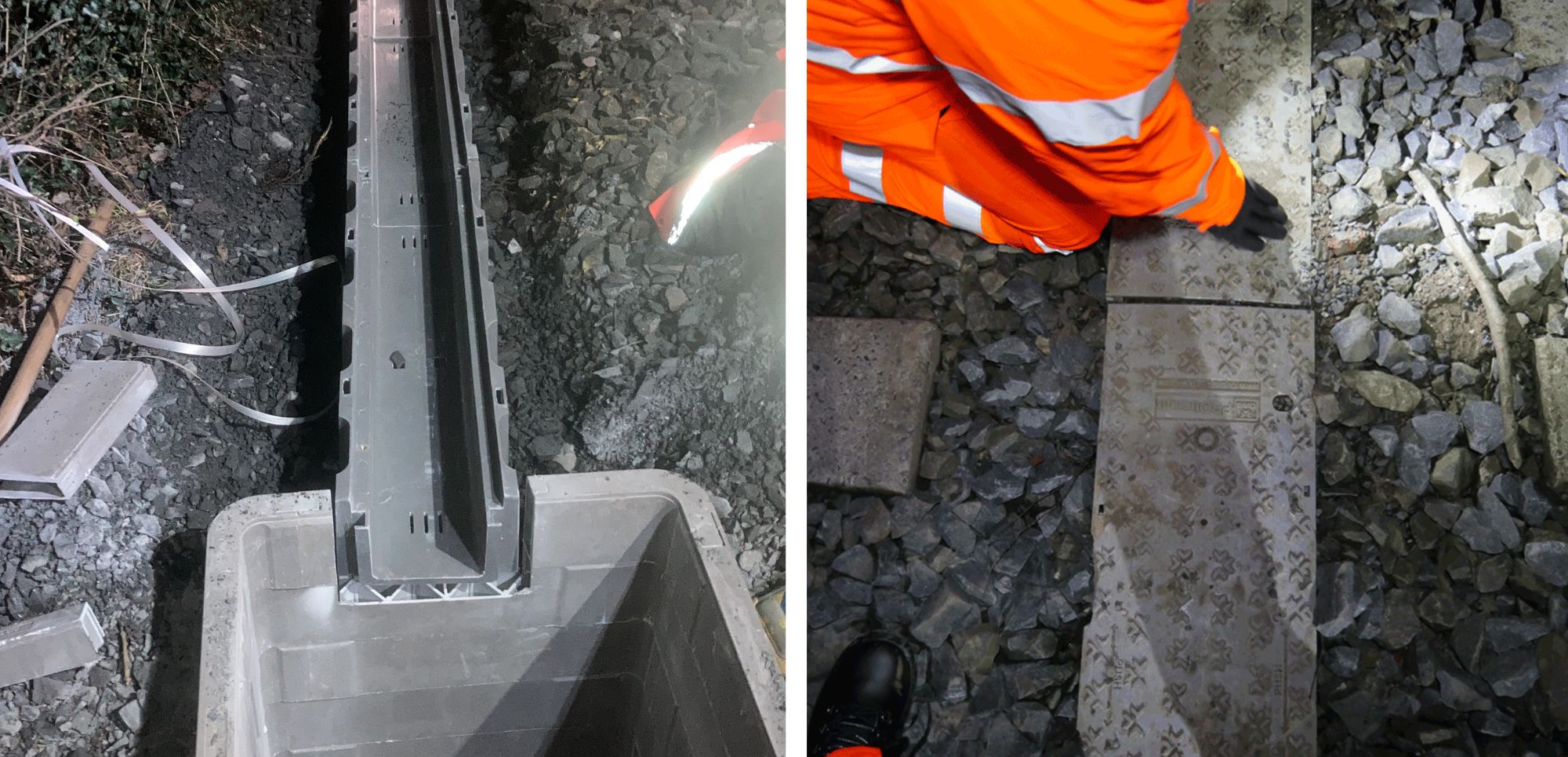
7. PROtrough meets STAKKAbox™ at Lurgan
📍 Location: Lurgan, Northern Ireland
🪛 Solution pictured: PROtrough & STAKKAbox™ ULTIMA Connect
📌 Highlight: Cable trough running straight into a STAKKAbox™ chamber, with the route and the access point both coming from the Cubis range, and both integrating seamlessly.
⚖️ Versus concrete trough: Both the trough and chamber are GRP composite, so they can be easily adapted on-site to suit. They're also part of an integrated system approach, so the trough, the chamber and the cover are designed to connect seamlessly. You don't get that with concrete troughs and chambers - which present a comparatively awkward and inflexible approach.
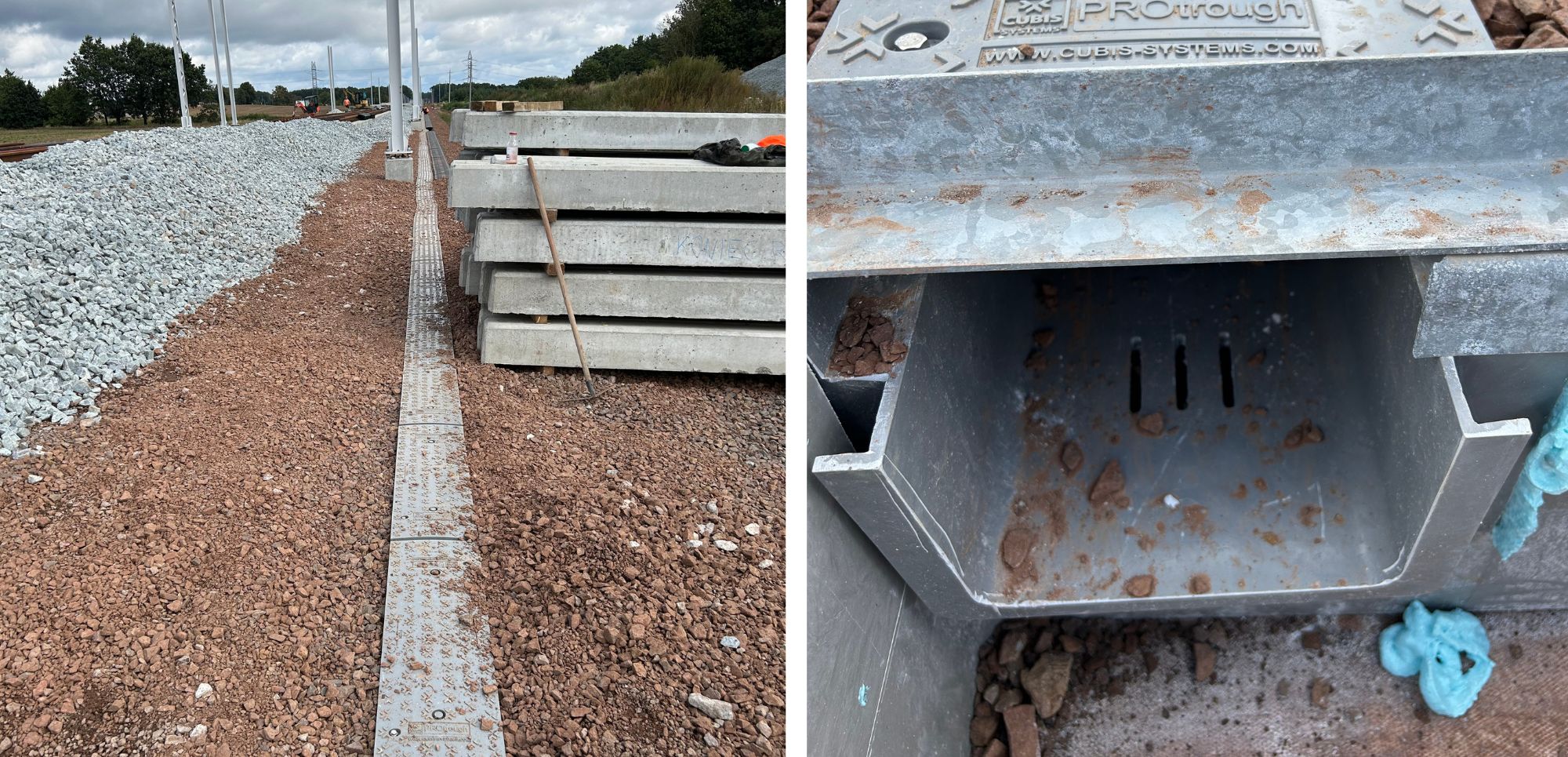
8. Following the natural curve of a new Polish line
📍 Location: Somonino, Poland
🪛 Solution pictured: PROtrough & STAKKAbox™ ULTIMA access chamber
📌 Highlight: Meter-long connectable units that allow 3° of rotation in the unit, following natural track curvatures.
⚖️ Versus concrete trough: Concrete trough comes in rigid lengths, so following a bend usually means extra pieces or cutting. PROtrough's meter-long units allow 3° of rotation, so the run follows the natural curve of the track as it's laid, and wedges take care of tighter bends down to a 1.5m radius.
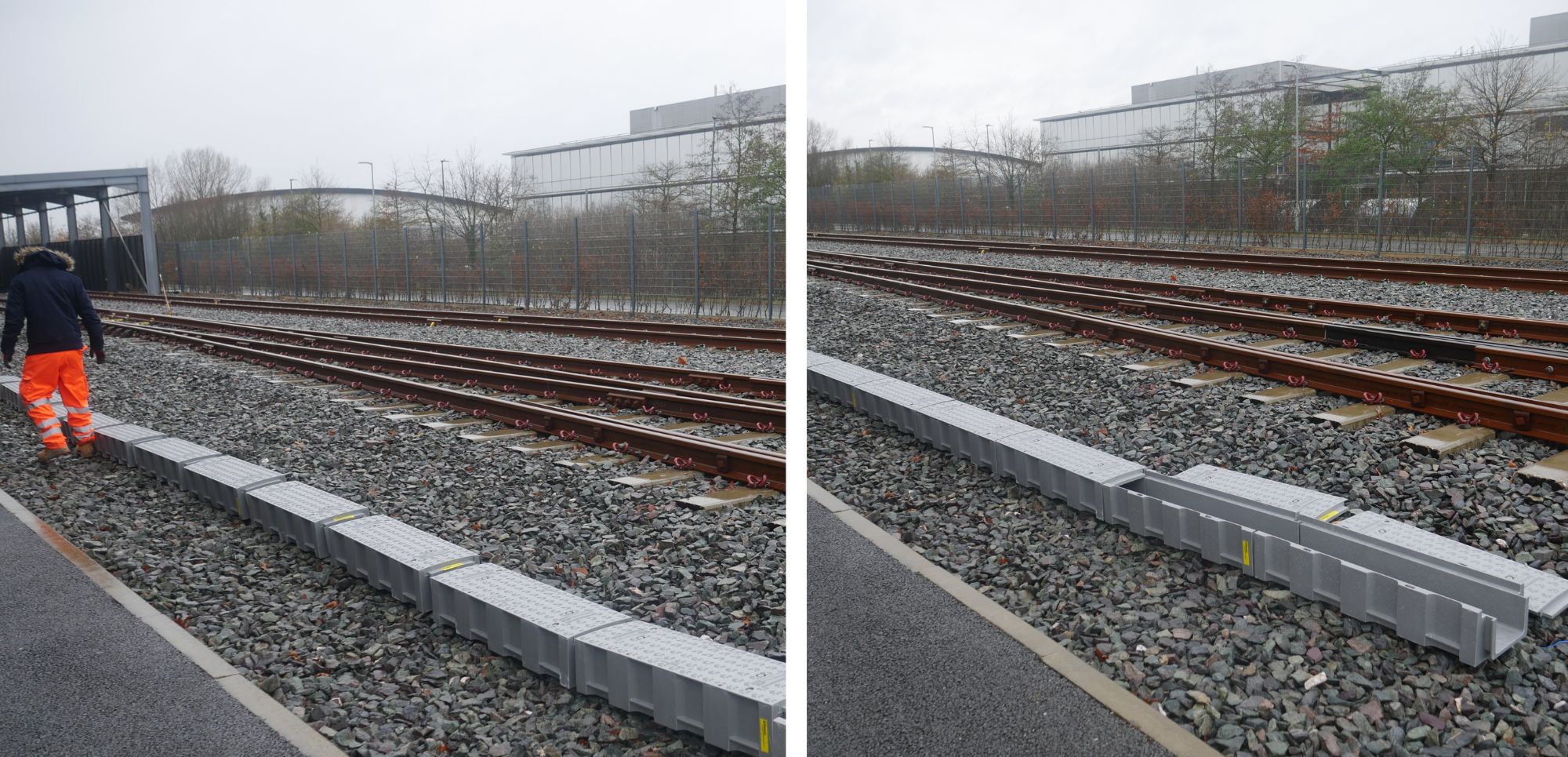
9. Demonstrating what long-life cable protection looks like
📍 Location: Advanced Transport & Infrastructure National College, England
🪛 Solution pictured: PROtrough
📌 Highlight: Installed where transport and infrastructure workers train, so they see best practice first-hand: a cable route built to last, with covers that slide back for inspection and click shut again.
⚖️ Versus concrete trough: Give concrete trough enough years in the ground and it can crack, spall, and let water in. Composite trough doesn't suffer from these in the same way. GRP also stands up better to chemicals during its buried life, which means a longer installed life and less maintenance to plan for.
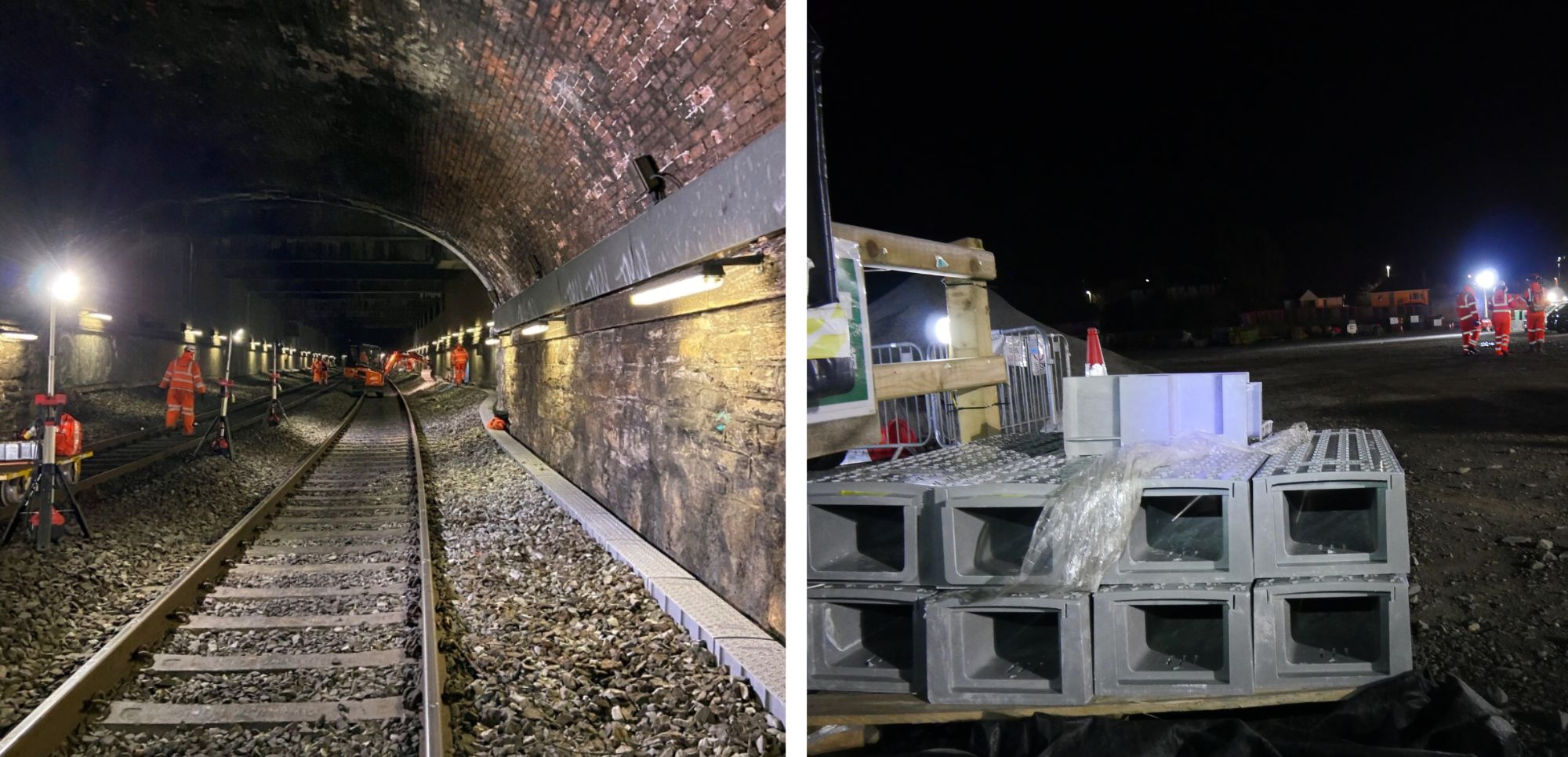
10. Getting trough into a Belfast tunnel
📍 Location: Belfast Transport Hub, Northern Ireland
🪛 Solution pictured: PROtrough
📌 Highlight: PROtrough running along the foot of a brick-arched tunnel wall, with a crew working by temporary floodlight.
⚖️ Versus concrete trough: Tunnels leave very little room to work, and concrete trough is heavy, labour-intensive and often needs mechanical lifting equipment. PROtrough weighs under 20kg, so one person can lift and install it, keeping manual handling within regulations where access is restricted.
Talk to the team about PROtrough
These cable trough projects are spread all across Europe, but the same benefits apply to every site that opted for PROtrough instead of concrete trough:
1️⃣ Lightweight GRP cable management units, 5 times lighter than concrete troughs
2️⃣ Easy manual handling, with reduced risk and reduced tools needed
3️⃣ Faster, less disruptive, and more adaptable installation
4️⃣ More efficient transport, reducing truck requirements by 80% compared to concrete
5️⃣ Long-term composite durability that won’t suffer from cracking, spalling, or water ingress over time
6️⃣ Eliminates common heat distortion and thermal expansion issues
7️⃣ Extensive range of accessories for flexibility along the cable route
8️⃣ Seamless integration with the Cubis Systems chamber range
9️⃣ Delivers fire standards and structural integrity unachievable in alternative thermoplastic troughs
🔟 Complies with European fire retardancy specs
If you want all these benefits on your next project requiring a cable troughing system, get in touch.
FAQ
-
How much lighter is PROtrough than concrete trough?
PROtrough is 5 times lighter than concrete. A standard unit weighs under 20kg, where concrete trough can weigh over 90kg. That makes it suitable for single-person lift and install, in line with manual handling regulations. The larger PROtrough 350 weighs 23.35kg (cover 5.18kg).
-
Does PROtrough meet fire requirements for tunnels and stations
It's designed to comply with European fire retardancy specifications, including those for tunnels and stations. It has passed external tests including DIN53438-2, hot brake shoe, wooden crib and K1. Other lightweight thermoplastic troughs can't achieve these fire standards.
-
What load class does PROtrough meet?
PROtrough meets the vertical load class of A15 set by EN124. It has been designed with optimum sidewall strength performance to ensure minimal flex when back filled. Linear ballast anchor points also stop units being displaced by passing trains or vehicles.
-
Is PROtrough approved for use on rail and in substations?
Yes. It's Network Rail approved and approved for full use within electrical substation compounds.
-
How is PROtrough installed?
Units connect with a simple slide-and-drop male-to-female joint, and the cover has a one-click interlocking, sliding mechanism. Multi-point handle grips make manual handling easier. Standard units are meter-long and allow 3° of rotation, so runs follow natural track curvature.
-
Can PROtrough deal with tighter bends, changes of level and junctions?
Yes. Wedges give a 1.5m bend radius, and adaptors allow male-to-male and female-to-female connections. A 30° elevation connection system handles abrupt changes in level, such as obstacles and embankments. The 5-way junction box gives five adjustable inlets and outlets.
-
What's the difference between PROtrough and PROtrough 350?
The 350 is the largest unit in the range, with a bigger trough (240mm internal width, 250mm internal depth) for more cables. It has a flat-sided design, so units can sit side by side to form a walkway, and a turnkey lock system with no loose hardware. The slide-and-drop connection and the rest of the range's features carry over.
-
How does PROtrough perform over time?
Composite trough doesn't suffer from cracking, spalling or water ingress in the same way concrete does. GRP also outperforms traditional construction for chemical resistance during its buried life, and the system avoids common heat distortion and thermal expansion issues. Moulded base slots drain water into the ground, and the tread pattern and concave cover shed water and prevent ice building up.
-
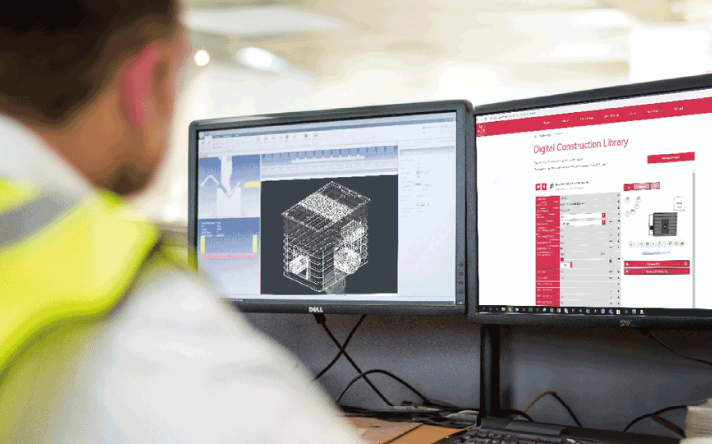
Do you have PROtrough BIM files?
Yes, readily available in our free BIM configurator. You can also use our tech library to access any datasheets and technical documents needed.